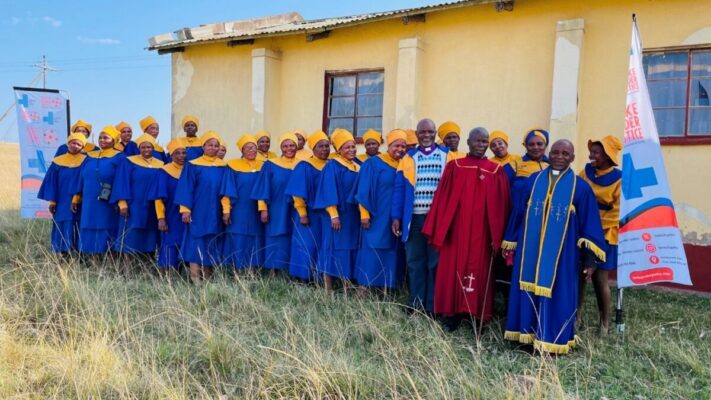
136 religious leaders across Amathole District and Nelson Mandela Bay commit to safer, more supportive congregations
Religious leaders from across Amathole District and Nelson Mandela Bay are calling for stronger action to prevent and respond to gender-based violence (GBV), recognising the powerful role churches and other faith communities can play in supporting survivors and challenging harmful gender norms.
Throughout June 2026, senior trainers from Sonke Gender Justice facilitated policy discussions with 136 religious leaders in their own congregations. The sessions focused on building faith leaders’ capacity to promote gender equality, challenge harmful gender norms, and strengthen how their churches respond to GBV.
For many survivors, faith communities are a first and trusted source of support. That gives religious leaders real influence over how their congregations understand gender, relationships and violence — and a responsibility to ensure that anyone who discloses abuse is met with dignity and connected to the right services.
As faith leaders, we have a responsibility to challenge harmful beliefs and create safe spaces where survivors are supported and heard.
Building safer churches from the inside out
The sessions gave religious leaders room to reflect on the realities of GBV within their own communities, share experiences from their congregations, and work through practical ways to strengthen prevention and survivor support. Participants engaged actively, raising questions and examining how gender norms and power dynamics play out within their congregations and neighbourhoods.
The clearest message to emerge churches need stronger internal safeguarding systems. Several religious leaders asked Sonke Gender Justice for further technical support to design and implement safeguarding policies, particularly to better protect women, children and other vulnerable members of their congregations.
Participants also proposed setting up dedicated GBV committees — or adding GBV responsibilities to existing church structures — to provide information, support survivors, and refer them to appropriate services. They pointed to the Methodist Church of Southern Africa as a model of what this can look like in practice, citing its awareness work during campaigns such as the 16 Days of Activism for No Violence Against Women and Children.
From awareness to practical support
The discussions also surfaced gaps in some religious leaders’ knowledge and confidence when responding to disclosures of GBV. Participants asked for further training on referral pathways, survivor-centred approaches, and how to handle sensitive disclosures — with a shared emphasis that survivors must be met with empathy and support, and that a poor response can cause further harm.
This request marks a meaningful shift: from recognising GBV as a social problem to asking what faith institutions can practically do when someone comes forward for help. For religious leaders, that means knowing where to refer survivors, understanding the limits of their own role, maintaining confidentiality, and making sure survivors can reach specialised support when they need it.
Turning commitment into action
Religious leaders left the sessions with concrete commitments: to weave GBV prevention and gender equality messaging into church services, Sunday school programmes and other congregational activities, reaching both adults and young people. The engagements also deepened collaboration between Sonke Gender Justice and local churches, opening the door to continued training and support.
Sonke’s programmes have changed lives in our community, including my own family, where they supported us in court appearances. We are now better equipped to speak out against gender-based violence. — Religious leader, New St Roma Church
That testimony points to what sustained, community-based engagement can achieve: not just greater awareness, but greater confidence to actually respond when GBV happens close to home.
Building partnerships for lasting change
The June engagements show what faith-based institutions can contribute to long-term GBV prevention when religious leaders have the knowledge, tools and referral networks to respond appropriately. For Sonke Gender Justice, continued work with faith leaders is an opportunity to strengthen community-led approaches to prevention while helping religious institutions become safer, more inclusive spaces for women, children and everyone in their care.
Ultimately, the role of faith leaders goes beyond speaking about GBV. It means challenging the beliefs and practices that allow violence to continue, responding safely when survivors seek help, and using their influence to build communities grounded in dignity, equality and accountability.