When South Africa assumed the 2025 Group of twenty(G20) Presidency, it inherited more than just a diplomatic responsibility. It gained a platform to influence how the world responds to inequality, climate crises, and fragile democracies. In this high-stakes moment, civil society has a critical role: ensuring that global policy reflects the realities of those most affected.
That is the purpose of the Civil 20 (C20), the official engagement group for civil society in the G20 process. This year, Sonke Gender Justice has had the privilege of serving as lead facilitator of the C20 Working Group on Women and Gender Equality through the Policy Development and Advocacy Manager Mpiwa Mangwiro-Tsanga.
Our task as a working group is clear: to push back against the historic sidelining of gender equality in global economic governance, and to make the case that justice for women and girls is not optional, it is foundational to sustainable progress.
The G20 represents the world’s most powerful economies, together accounting for about 80% of global GDP and 75% of international trade. Its policy decisions extend far beyond its borders, shaping trade regimes, financial flows, climate responses, and development priorities. Yet historically, gender equality has been treated as peripheral, a “soft issue” outside the realm of hard economics.
The C20 was created to change that. As the formal channel for civil society input, it provides space for grassroots perspectives to influence the G20 agenda. For communities excluded from elite policymaking, women in the informal economy, migrant workers, people with disabilities, LGBTIQA+ groups, the C20 is one of the few platforms where their concerns can be translated into policy recommendations for the world’s most powerful governments.

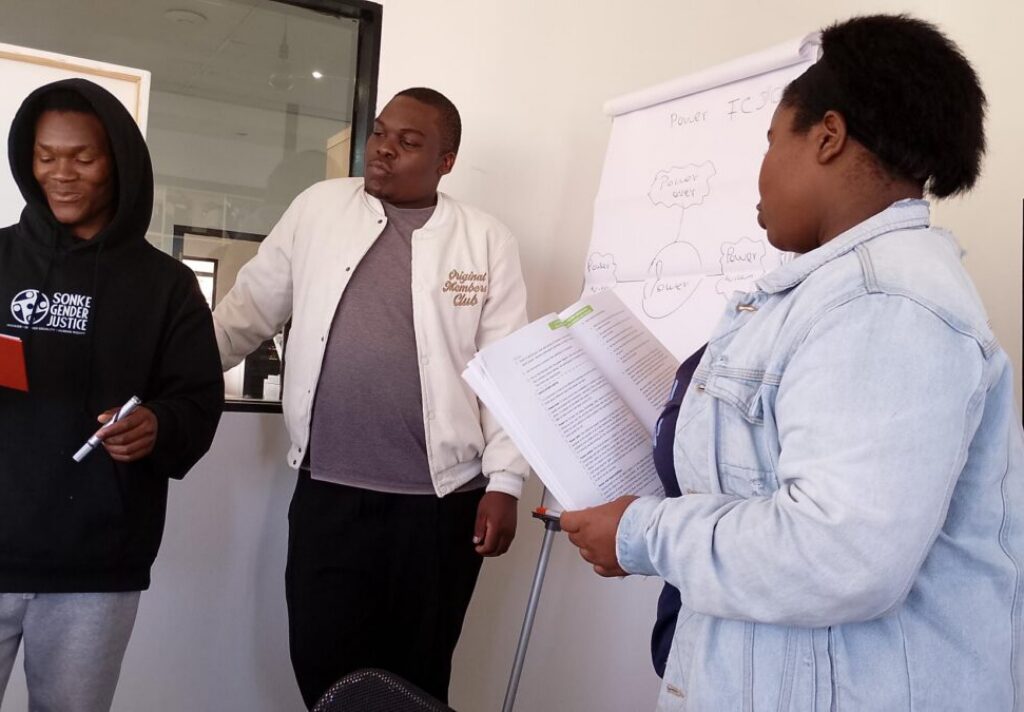
In leading the C20 WGE working group, Sonke is working alongside feminist organizations such as Girls Not Brides and Black Women’s Caucus, disability rights advocates, youth leaders, and grassroots movements to draft the C20 Policy Brief on Women and Gender Equality. This document is a call to action — grounded in evidence, sharpened by lived realities, and unapologetic in its demands.
At its core, the brief argues that gender inequality is not an afterthought but a defining challenge of our time. This is because:
- Gender-based violence costs the global economy $1.5 trillion every year, draining productivity and entrenching trauma.
- Women perform three-quarters of unpaid care work globally, subsidizing economies that fail to count them.
- Women remain locked out of land, credit, digital tools, and decision-making spaces, especially in the Global South.
- Progress on parity is so slow that, at current pace, it will take 300 years to achieve global gender equality.
The brief’s recommendations reflect the urgency of this crisis. They include:
- Mandating gender-responsive budgeting across all G20 recovery and climate finance packages.
- Establishing a Permanent G20 Gender Equality Taskforce with measurable accountability.
- Allocating at least 1% of GDP to gender equality initiatives, with funds ring-fenced for grassroots feminist, youth-led, disability-led, and women’s organizations.
- Eliminating harmful practices such as child marriage and female genital mutilation by 2030.
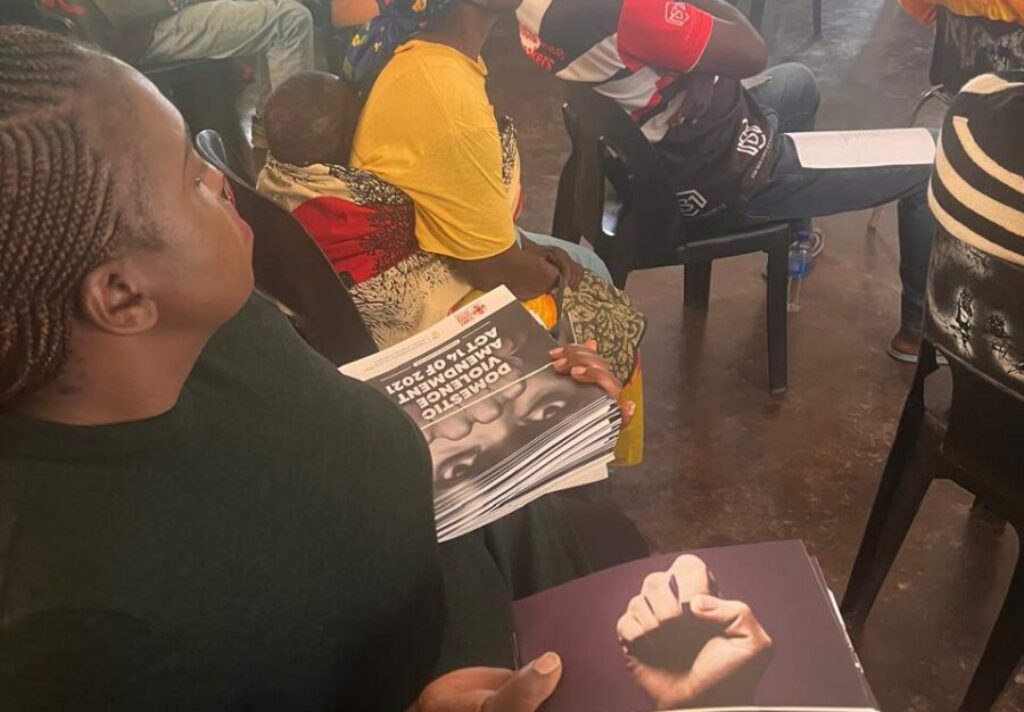
- Funding universal childcare and survivor-centred GBV services, including safe transport, digital protections, and trauma-informed care.
- Guaranteeing women’s access to land, credit, digital technology, and markets to close economic participation gaps.
- Ensuring women’s leadership in climate action and digital transformation, integrating Indigenous and traditional knowledge.
These proposals are not symbolic. They are pragmatic, cost-effective, and set to yield long-term returns. Research shows that closing the gender gap could add trillions to global GDP, while investing in GBV prevention saves lives and strengthens economies.

A historic moment for global gender equality
This year’s G20 Presidency is more than symbolic. It coincides with three milestones:
- 30 years since the Beijing Declaration and Platform for Action, the most comprehensive global roadmap for women’s rights.
- 25 years since UN Security Council Resolution 1325, which recognized the central role of women in peace and security.
- The midpoint of the 2030 Sustainable Development Goals, where gender equality is dangerously off track.
Taken together, these milestones underscore both how far we have come, and how far we still have to go. Despite decades of commitments, women and girls remain marginalized in economies, excluded from politics, and unsafe in their own homes. In the face of overlapping crises, climate disasters, conflicts, digital exclusion, authoritarianism, the G20 cannot afford business as usual.
For Sonke, leading the C20 WGE process is not merely about drafting a document. It is about building coalitions across movements: feminist, labour, disability rights, LGBTIQA+, youth, and climate justice. It is about amplifying the realities of women who are too often invisible to global policymakers: the refugee denied healthcare, the informal worker without protection, the adolescent girl facing early marriage.
It is also about accountability. Civil society’s role does not end when the policy brief is handed over to G20 ministers and sherpas. The real test lies ahead: will leaders back their words with resources and structural reforms, or will we see another cycle of lofty communiqués and incremental promises?
Sonke’s message is simple but urgent: gender equality is not a side issue. It is the foundation of economic recovery, climate resilience, digital transformation, and peace. Without it, the G20’s promises of prosperity will remain hollow.
This year, South Africa has the chance to institutionalize gender equality within the G20, setting a precedent for decades to come. The opportunity must not be squandered.
As civil society, we will continue to demand that women’s rights, voices, and leadership sit at the centre of global decision-making. For the G20, the choice is stark: embrace transformative change, or risk building the future on the crumbling foundations of inequality.
Because until women and girls are safe, free, and equal — there can be no true progress.
Written by Mpiwa Mangwiro-Tsanga, Policy Development and Advocacy Manager