A woman leader in Mpumalanga is translating feminist leadership training into practical community action by mobilising local stakeholders to strengthen responses to gender-based violence (GBV). Her work follows a feminist leadership training facilitated by Sonke Gender Justice with support from the Embassy of Ireland.
Building feminist leadership
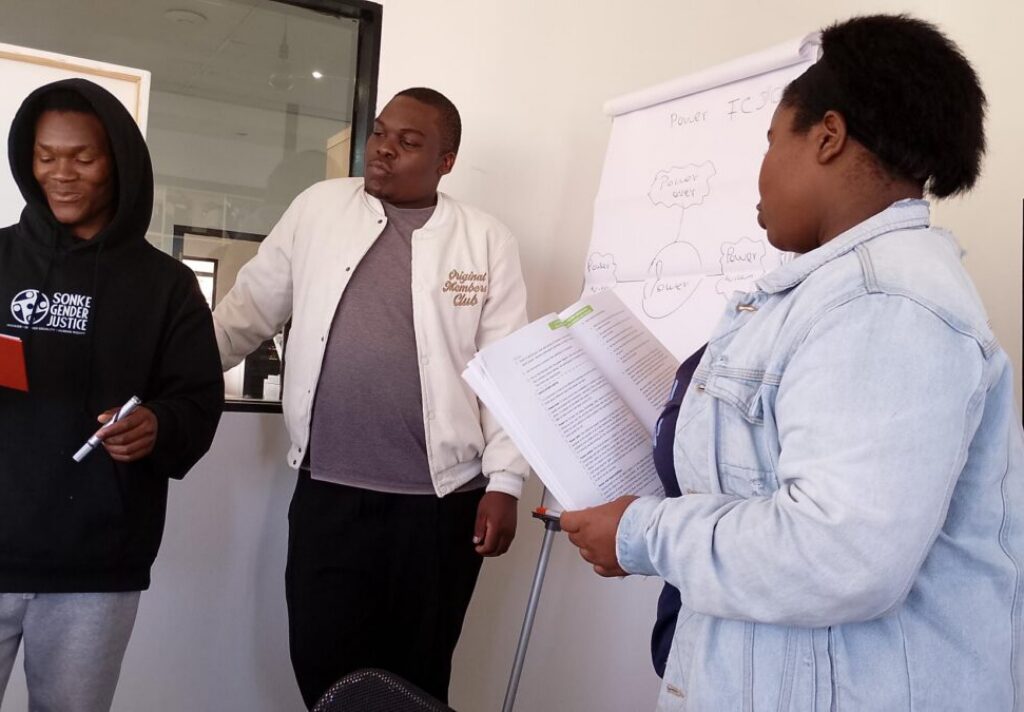
Held on 26 and 27 May 2026, the training brought together 32 community leaders: 26 women and six men. Participants explored gender norms, patriarchy, power, leadership, and GBV prevention through participatory methods such as the Rivers of Life exercise and gender reflection activities.
These activities encouraged participants to examine how power and gender norms shape relationships, leadership and decision-making in their communities. For some, the training also challenged earlier perceptions of feminism.
“As an employee of the Municipality, what I have learnt through this process has been truly eye-opening. It has provided me with valuable insights into how I can engage municipal leadership and advocate for similar capacity-building opportunities, so that they can strengthen their leadership and adopt a more transformative approach,” said Tebogo Khoza, Bushbuckridge Local Municipality (BLM).
Participants came to understand feminism as an inclusive approach to advancing gender equality and challenging harmful systems and norms that affect women, men, girls and boys. The training also highlighted the important role men can play in supporting gender-transformative change.
The training was designed to move beyond learning alone. Participants were asked to identify practical actions they could take in their communities, with Sonke providing follow-up mentorship and technical support.
Turning leadership knowledge into community action
On 17 June 2026, Sonke held a follow-up mentorship and check-in session with one woman leader who had participated in the training. As part of her post-training advocacy action plan, she identified the need for a community dialogue on GBV and requested Sonke’s technical support to convene local stakeholders.
Through mentorship, Sonke supported her to implement the action plan, strengthen her leadership practice and apply the knowledge gained during the training in a real community setting.
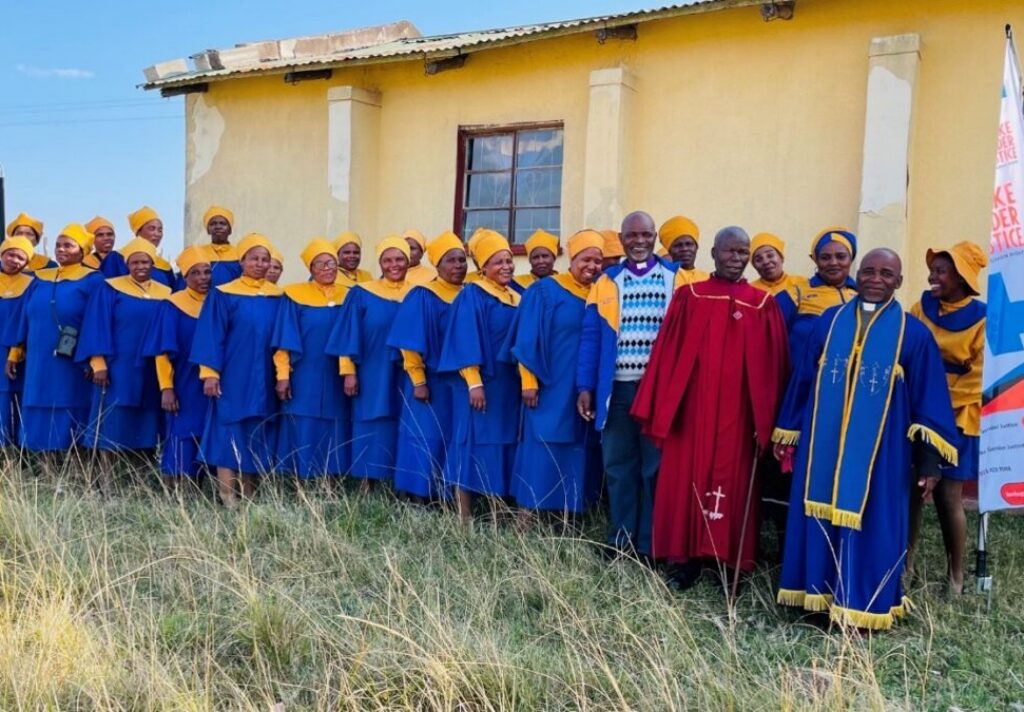
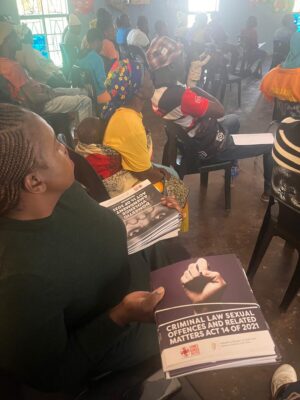
The resulting dialogue brought together 52 participants: 43 women and nine men. Stakeholders included traditional leadership, Community Policing Forums, traditional healers, Community Action Teams, and the Department of Health.
The dialogue created space for stakeholders to discuss the realities of GBV, identify gaps in local responses, and explore how different actors could work together to strengthen prevention, support survivors, and improve accountability.
“With what I learnt from the Transformative Feminist Training, I wanted to implement a GBVF dialogue in my community. As an organisation, we provide support to many children and their parents and therefore felt that raising awareness about GBVF would help them better understand, identify and report cases of GBVF. The dialogue also provided an important platform to bring together various stakeholders to educate parents, raise awareness, and share information about the services and support available within the community.” said participant Esther Khoza.
For Sonke, the engagement was both a mentorship opportunity and a way to strengthen links between community structures and service providers.
A key shift was the leader’s commitment to collective and inclusive leadership. Rather than positioning herself as the sole voice or solution-maker, she brought different stakeholders together, created space for women and community members to contribute, and connected people with available services. Her approach showed how feminist leadership can become practical, collaborative action.
From participation to accountability
The engagement demonstrated how leadership development can move from individual capacity-building to broader community accountability and action.
The leader moved from identifying GBV as a community concern to taking concrete action by independently convening a GBVF dialogue and mobilising diverse stakeholders. The dialogue led to a GBV survivor being referred to a social worker for psychosocial support. It also prompted a male participant to request more information about the root causes of GBVF so he could help educate and mobilise other men to be part of the solution.
The dialogue also created space to discuss LGBTQIA+ inclusion. Parents sought guidance on supporting and protecting their LGBTQIA+ children, while a local Community Action Team member who identifies as LGBTQIA+ shared lived experience to help deepen understanding. This further demonstrated the leader’s ability to apply feminist leadership in inclusive and practical ways.
Service gaps and community priorities
- Limited access to psychosocial support: Community members noted that GBV dialogues can trigger emotional distress when participants share personal experiences, highlighting the need for psychosocial support during and after sessions.
- Low participation of men: Participants identified limited involvement of men and boys as a gap and called for greater engagement of men as allies in GBV prevention.
- Barriers to accessing community support structures: One community member reported being unable to access support from the Community Policing Forum (CPF) because of outstanding community levies, pointing to financial barriers that can block access to essential support mechanisms.
- Limited police visibility: Community members raised concerns about limited police presence in the area, which they felt affected prevention, reporting, and timely responses to GBV incidents.
The local traditional leader welcomed the platform, saying it gave community members an opportunity to learn about GBVF-related issues and available services. He thanked participating stakeholders for educating and supporting the community, and noted that the area often receives limited attention because it sits on the border of Bushbuckridge.
Stakeholders committed to providing further education, information, and referrals as needed. The case referred to the social worker will be followed up to help ensure the survivor can access appropriate support.
Why mentorship matters
The experience underlines the value of sustained investment in women’s leadership and mentorship, especially when women leaders are supported to turn knowledge into action within their own communities. It also shows that feminist leadership is not limited to formal authority. It can mean listening to communities, building relationships across structures, challenging harmful norms and creating spaces for collective responses to violence.
For Sonke Gender Justice, supporting community leaders to develop and apply gender-transformative leadership approaches is part of a broader effort to strengthen community-led GBV prevention and promote gender equality.
“This work is important because it equips leaders with the knowledge, skills and confidence needed to address challenges within their institutions and communities. It is equally important to create space for male allies, equipping them with the understanding to support women’s leadership, challenge gender inequalities and contribute meaningfully to GBVF prevention efforts. This contributes to creating safer and more inclusive communities where people are empowered to claim their rights, challenge harmful social norms and actively contribute to positive change.” — Rhandzekile Mathebula, Sonke Gender Justice Trainer
A socio-ecological approach to GBVF prevention
- Individual level: Women leaders gain knowledge, skills and confidence to take action.
- Interpersonal and community levels: Leaders mobilise community members, engage male allies and strengthen collaboration among local stakeholders.
- Institutional level: The work opens opportunities to engage municipal leadership and service providers to improve GBVF responses.
Working across these interconnected levels helps challenge harmful social norms, strengthen accountability and build safer, more supportive communities. The Mpumalanga experience shows that when women leaders are equipped with knowledge, confidence and sustained support, the impact can extend well beyond the individual to the communities they serve.
Sonke Gender Justice will continue to support trained women leaders in implementing their gender equality and GBVF action plans. With support from the Embassy of Ireland, Sonke will provide ongoing mentorship and capacity-building for women leaders, community members and key stakeholders. This continued engagement will strengthen collaboration, identify gaps in local GBVF responses, support advocacy for greater accountability, and help expand access to survivor-centred support services.