The G20 is an international forum established in 1999 to strengthen cooperation among the world’s major economies. Although it began as a platform focused on financial stability, its agenda has broadened to include development, health, gender equality, and Gender-Based Violence and Femicide prevention, reflecting the understanding that sustainable growth depends on addressing systemic inequalities.

The 2025 G20 Presidency was hosted in South Africa, marking a historic moment for Africa. On the sidelines was the social summit, which was held prior to the official G20 summit from the 18th to the 22nd of November, bringing together members of civil society, informal groups, business networks, trade unions, faith leaders, official engagement groups and other stakeholders. This summit offered an opportunity to emphasise world priority issues, including GBVF, HIV prevention, gender equity, and community-driven development.
This year’s summit was held under the theme ‘Solidarity, equality, accountability’. It emphasised the need for all nations to cooperate in addressing global challenges, bridging inequality gaps and promoting social justice for all.
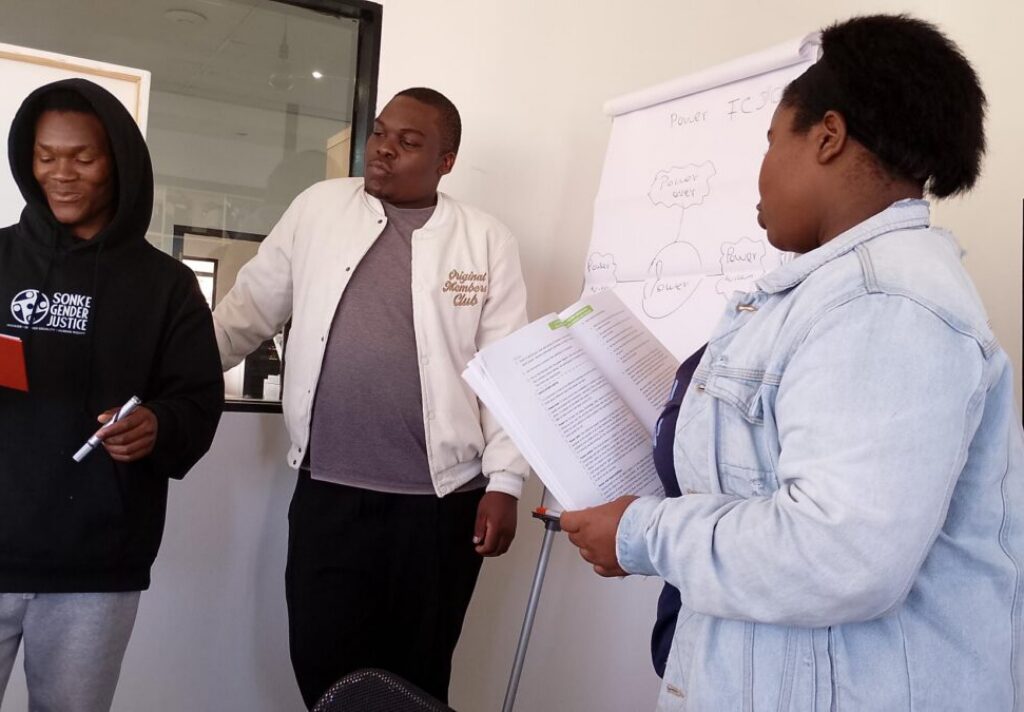
Sonke Gender Justice was a co-leader of the C20, an official engagement group that brings the priorities of civil society organisations together. The C20 ensures that global leaders’ decisions are community- and people-centred, inclusive, consider lived experiences and reflect the needs of communities and civil society organisations. Sonke also played a central role in the Gender Equity Working Group, helping to shape global advocacy on gender justice and GBVF issues.
During one of the side events under the theme ‘Women and Girls on the Lead: Combating GBV and Advancing Health through the Global Fund Partnership’’, Mpiwa Mangwiro-Tsanga, Policy Development and Advocacy Manager, highlighted the importance of integrating GBVF prevention into broader health and social systems in a sustainable and inclusive manner. She emphasised that GBVF does not exist in isolation but is closely linked to other issues, particularly HIV, with survivors being significantly more vulnerable to infection.
For this reason, interventions should not treat these issues separately. Instead, they must ensure that survivors can access services safely, with autonomy, and without the frustration of navigating multiple systems. Mangwiro-Tsanga stressed the need for integrated service models that combine healthcare, psychosocial support, and legal assistance in one place.
While Thuthuzela Care Centres provide an example of such a model, many remain under-resourced.Mangwiro-Tsanga also underscored the importance of frontline workers who are trained, supported, and sensitised to avoid secondary victimisation, as this is often where survivors disengage from services.

“Data systems must include GBVF indicators so that responses can be holistic and evidence based. We need stronger policies supported by adequate, multi-year financing and meaningful community engagement to build trust. Community organisations are essential for early identification and referral of GBVF cases, as well as for addressing the harmful norms and root causes that perpetuate violence, I suggested that gender-transformative approaches and survivor-led systems be created to contribute to more equitable and responsive health structures,’’ she said.
Vuyokazi Gonyela, who is Sonke’s Project Manager for the Inkanyezi project implemented in South Africa’s Eastern Cape and Mpumalanga provinces, , focused on lessons emerging from grassroots, women-led advocacy within communities. She noted that women in their diversity are not silent, but they are active leaders who carry much of the care burden while also confronting the ongoing crisis of GBVF in South Africa. However, despite their central role in households and communities, women are often excluded from decision-making, with men continuing to dominate spaces that shape policies and services affecting women and girls. This imbalance, she explained, limits women’s ability to make informed choices about their health, HIV prevention, and safety.
“Real change requires empowering communities to understand the issues they face and build women’s confidence to participate in decisions that affect them. We need to work with men and boys as allies who are sensitive, intentional, and aware of the challenges experienced by women, girls, and gender-nonconforming persons. Effective advocacy will depend on the kind of information we convey to bring lasting change.’’ Gonyela reiterated.
As a lead facilitator for Women, Gender and Equity Working Group, Mpiwa Mangwiro-Tsanga spoke about leaving no one behind in the advocacy for access and health equity. Other experts shared insights into the importance of inclusion and ensuring access to quality and social justice services for all.

“Civil society should focus on who matters, whose lives are prioritized and who’s voices are mostly listened to. The affordability gap needs to be bridged, to promote equal access to quality health and HIV/AIDS care. We need more licensing for Lenacapavir and more funding interventions, while acknowledging that intersection of GBV and health needs to be addressed.” Mangwiro-Tsanga recommended.
At the sidelines of the summit, Sonke participated on a G20 women shutdown to stand in solidarity with the people of South Africa against the prevalence of violence against women and girls. This shut down was symbolic in raising awareness to world leaders about the predicaments of women and girls in South Africa and beyond.
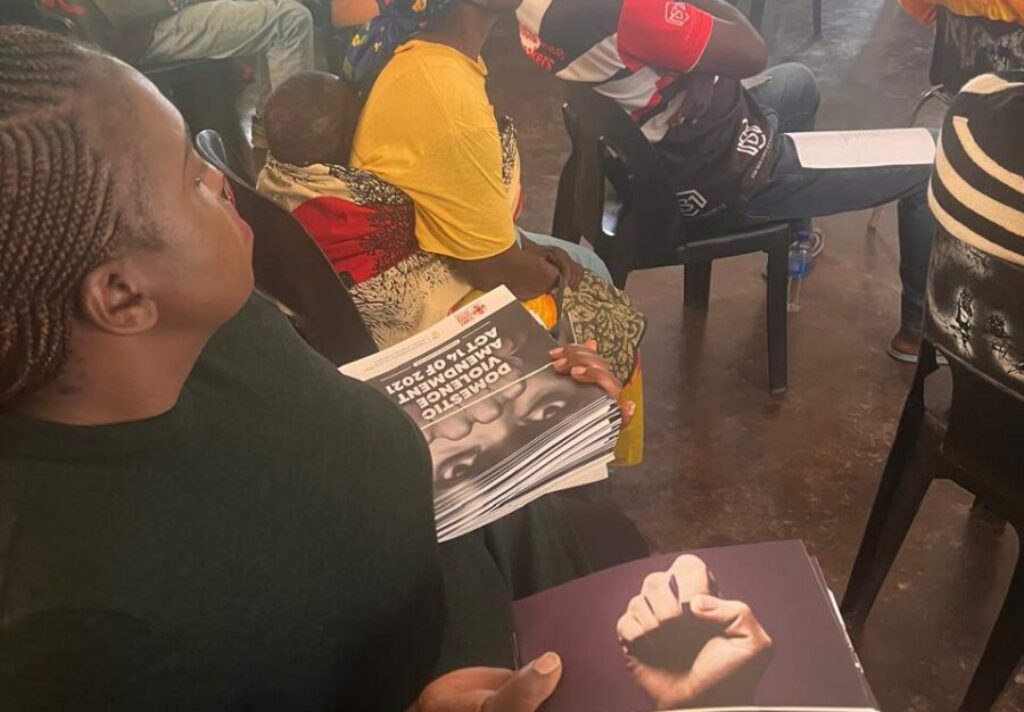
During the closing ceremony of the G20 Social summit, President Cyril Ramaphosa declared Gender-based Violence and femicide a national disaster in South Africa. Given Sonke’s active participation during this event, Sonke is committed to following up on the measures taken by the South African government to curb the spread of the national disaster.