Community leaders in Bushbuckridge are using local planning and justice systems to push for stronger action on gender-based violence and femicide.
In Bushbuckridge, gender-based violence and femicide (GBVF) continues to affect the daily lives of many women and girls. Abuse, exploitation, poverty and harmful gender norms remain major drivers, making local action urgent.
Sonke Gender Justice is working with communities in Bushbuckridge to strengthen accountability, improve participation in local governance, and expand access to justice and support services. The work is supported by the Embassy of Ireland.
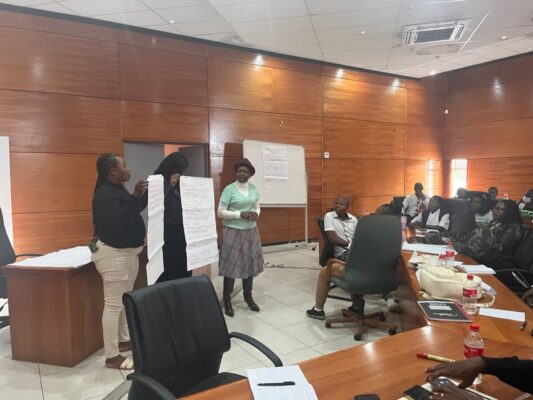
On 11–12 March 2026, Sonke Gender Justice held a two-day training on the National Strategic Plan on Gender-Based Violence and Femicide (NSP-GBVF) and Integrated Development Plan (IDP) processes. Community leaders were trained on how to use policy and municipal planning spaces to influence decisions and advocate for GBVF priorities.
Participants highlighted weak consultation, limited access to information and poor participation in planning meetings as barriers for women, young people and other vulnerable groups. They called for stronger awareness campaigns, better collaboration with government, and GBVF priorities to be reflected in municipal plans and budgets.
Community priorities
- Gender-based violence and femicide
- Unemployment and poverty
- Teenage pregnancy and sexual exploitation of young girls
- Substance abuse and crime
- Limited access to satellite police stations and social workers in rural areas
From training to accountability
Follow-up engagements in April focused on turning that learning into action. Community members raised concerns about domestic violence, underreporting, limited psychosocial support, unsafe public infrastructure and weak coordination between municipalities and community structures.
On 28–29 April 2026, Sonke Gender Justice hosted a second training on GBVF and case monitoring for civil society, community policing forums, traditional leaders, disability rights groups, LGBTQIA+ organisations and government stakeholders. Participants examined how GBVF cases move through the justice system and explored community-led case monitoring as a practical accountability tool.
Across both engagements, participants stressed that responses to GBVF will remain fragmented unless municipalities, civil society, traditional leaders, justice institutions and communities work together. They also emphasised the need to align municipal planning with the NSP-GBVF so that responses are coordinated and funded. The engagements also highlighted women’s economic empowerment, bystander intervention and better access to services as key to community safety.
Key outcomes
- Increased community participation in IDP planning processes
- Strengthened understanding of the NSP-GBVF among community leaders
- Improved collaboration between community stakeholders and justice structures
- Ongoing community-led monitoring of GBVF cases
- Strengthened advocacy for gender-responsive budgeting and inclusive service delivery
By strengthening local knowledge and accountability, Sonke Gender Justice is supporting communities in Bushbuckridge to push for safer, more responsive systems.