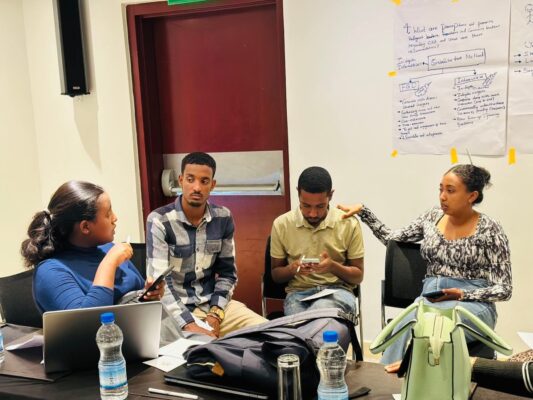
From 28 April to 2 May 2025, youth leaders and researchers from Ethiopia, Malawi, and Uganda gathered in Addis Ababa for an intensive five-day training on research methodology. Organised by Sonke Gender Justice under the SRHR4All project, the training aimed to equip Youth Participatory Action Researchers (YPAR) with the knowledge and tools needed to conduct high-quality, ethical, and impactful research on Comprehensive Sexuality Education (CSE) within their communities.
The training brought together 15 youth researchers from Malawi, Uganda and Ethiopia, SRHR4All project leads, and expert facilitators from Sonke Gender Justice, UNESCO, and the Centre of Human Rights at the University of Pretoria.
Throughout the five days, participants engaged in sessions designed to deepen their understanding of the principles of CSE and its role in youth wellbeing, explore research design through both qualitative and quantitative methods, examine ethical considerations in participatory and sensitive research, and gain practical experience using digital tools such as KoboCollect for data collection. The workshop also supported the development of country-level research plans and protocols to guide upcoming YPAR studies.
With growing demands for youth-centred and evidence-based approaches to Sexual and Reproductive Health and Rights (SRHR), this training marked a critical step in preparing youth to lead community-based research and advocacy for inclusive, rights-based CSE.
“It’s important for young people to participate in research because it enables them to take ownership of the issues and the necessary reforms. When they have the findings, they’re equipped with information they can use for evidence-based advocacy. This empowers them to express themselves effectively when engaging with CSE policies and addressing their real needs on the ground. I feel this is something truly in-depth and meaningful,” said Coreen Mwabaze, youth researcher from Uganda.
CSE is more than just a school subject. It is a human rights-based, age-appropriate approach to learning about bodies, relationships, consent, and wellbeing. When implemented well, CSE helps young people make informed choices, delay sexual initiation, and reduce risks such as unintended pregnancy and sexually transmitted infections (STIs).
Yet, many young people across Africa still face barriers to accessing quality sexuality education. These include harmful social norms, restrictive policies, and limited resources. That’s why understanding how CSE is implemented, and how it can be improved is a key priority for youth advocates and researchers.
Facilitators used participatory techniques such as group discussions, simulations, role-play, quizzes, and peer learning to ensure the experience was engaging and empowering. The sessions were designed to reflect the lived realities of youth researchers and emphasized inclusivity, including the active participation of young people with disabilities and from diverse backgrounds.
“Young people must lead this research, not only collect data, but shaping the questions and using the evidence to advocate for our rights,” Yanga Fadana, Research Monitoring Evaluatiion and Learning Coordinator at Sonke Gender Justice concluded.